
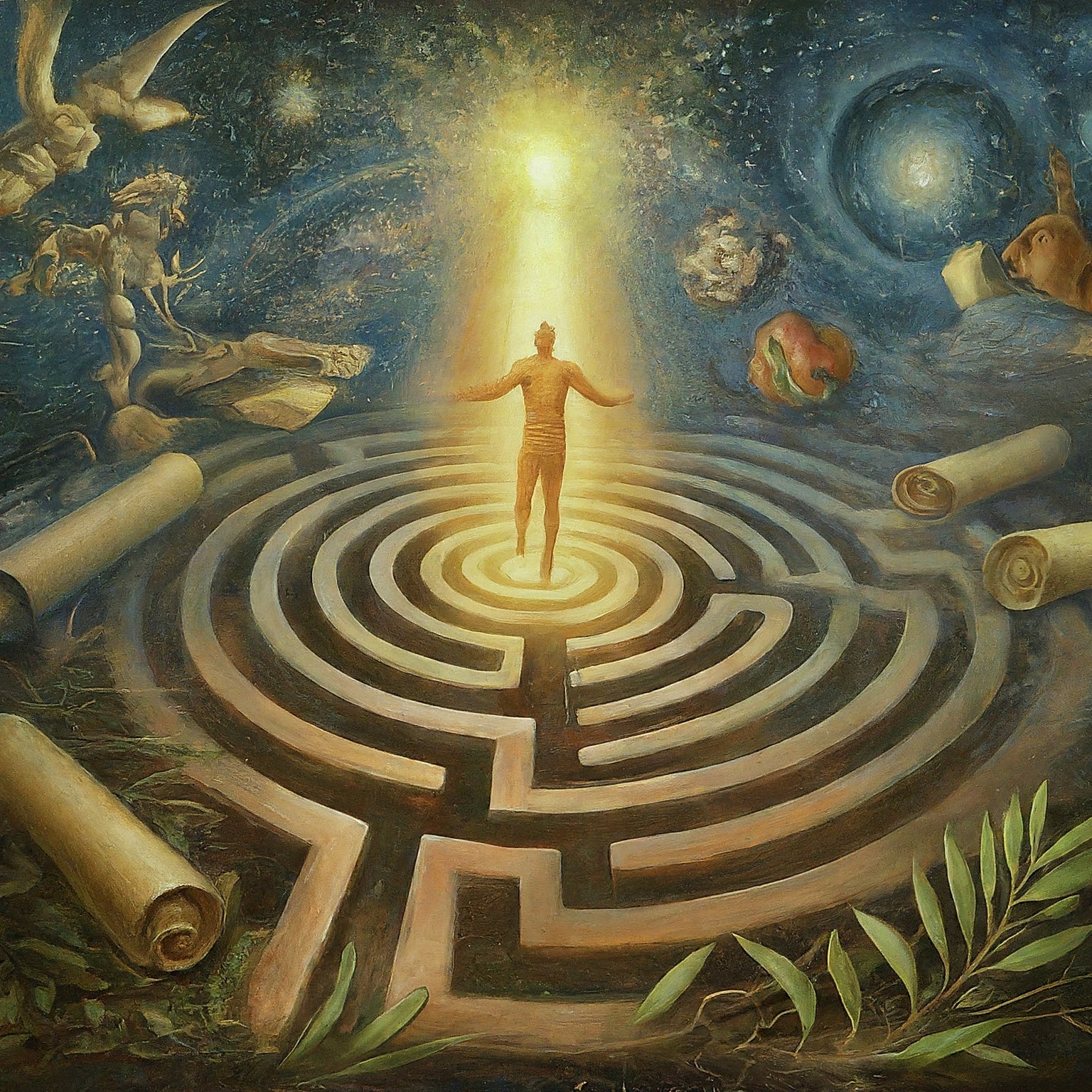

As I delve into Aristotle's concept of the Good, I find myself traversing a landscape where moral and philosophical terrains intermingle, each offering its own unique perspective on what it means to live a virtuous life. Aristotle's notion of the Good is not a singular, fixed point but a dynamic interplay of virtues and purpose, like a river that constantly shifts its course yet remains true to its essence.
In Aristotle's view, the Good is akin to a radiant sun, casting light on the path of human flourishing. It is not merely about the pursuit of pleasure or the accumulation of wealth but about achieving eudaimonia, a state of being that reflects the fullest realization of human potential. This state is a harmonious melody where reason and virtue are perfectly attuned, creating a life that resonates with both inner satisfaction and external harmony.
There is an emotional depth to Aristotle's Good, as it speaks to our deepest aspirations and our quest for meaning. It is like a guiding star that invites us to align our actions with our highest ideals, striving towards a life of virtue and purpose. This quest is deeply personal and transformative, as it calls us to reflect on our own values and the ways in which our actions contribute to the greater good. The Good, in this sense, becomes a mirror reflecting our own sense of integrity and our commitment to living authentically.
Contextually, Aristotle's Good emerges from a cultural backdrop that values reason, ethics, and the pursuit of a balanced life. In ancient Greece, the concept of the Good was intertwined with notions of civic duty and communal well-being. This historical context provides a rich tapestry against which Aristotle's ideas can be understood, highlighting how his vision of the Good was both a personal and social ideal. It was about living in accordance with one’s rational nature while also contributing to the harmony and flourishing of the community.
Yet, Aristotle's concept of the Good is not confined to his time; it remains a relevant and challenging idea in our contemporary world. It urges us to consider how we can live lives that are not only successful but also meaningful and virtuous. The Good, in modern terms, can be seen as a call to integrate personal fulfillment with ethical responsibility, to seek a balance between ambition and empathy, and to cultivate a life that honors both individual potential and communal harmony.
Reflecting on Aristotle's Good, I find it to be a profound and aspirational guide. It invites us to envision a life where our actions are guided by reason and virtue, where we strive to achieve our fullest potential while contributing to the well-being of others. The journey towards the Good is a continuous process, one that requires introspection, growth, and a commitment to living in alignment with our highest values. In this pursuit, we engage in a meaningful dialogue with ourselves and with the world, crafting a life that reflects both our deepest aspirations and our enduring commitment to the common good.